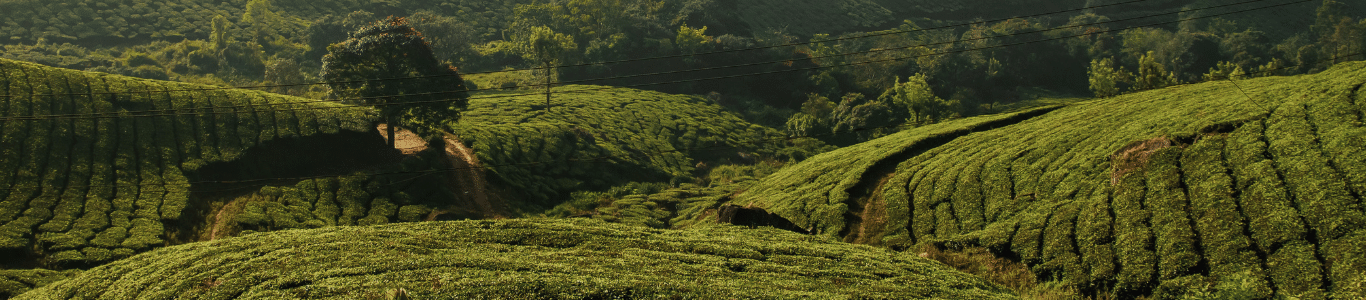
Increase share of permanent pasture
System: Dairy Cattle
Applicability
Mainly applicable for: Pasture-based systems
Not applicable or effective for: No grassland
Description
Increasing or maintaining the share of permanent pasture on the farm, which is generally defined as land used to grow grass and/or other herbaceous forage for at least 5 consecutive years, either naturally or through cultivation, as opposed to temporary grassland in rotation with arable (feed) crops (ley arable rotation).
Shifting to a greater share of permanent pasture can have varying implications at the farm level, due to interactions with the wider farm management. Depending on management (e.g., grassland renewal, fertilizer application rates) and local conditions (e.g., soil type), permanent pasture may result in lower herbage yields than temporary pasture, which is often due to a smaller proportion of productive grass species. Differences in herbage yield and nutritional quality, however, strongly depend on many the management, rather than age of grassland. In case of lower yields or quality, more supplementary feed may be needed to maintain milk production levels. Permanent pasture implies less soil cultivation and often less fertilizer is used.
Mechanism of effect
Regarding climate impacts the main benefit of permanent pasture is the large accumulation of carbon in the soil and below-ground biomass, as compared to ley arable rotation or continuous arable land. This is due to various factors causing higher C inputs to the soil, such as litter, a high root density, root exudation (release of organic compounds from roots), and the lack of physical soil disturbance.
Effects on GHG emissions are less straightforward due to various possible interactions with the wider farm management. For example, in case more permanent pasture results in lower herbage yields, more supplementary feed materials may need be purchased, potentially causing higher upstream emissions and LUC. On the other hand, in case of a lower share of grass and more maize in the ration, a lower emission intensity may be realized due to improved ration digestibility, higher intake levels and higher milk yields. Effects on total GHG emissions can vary substantially (e.g., Nguyen et al., 2013; Brask-Pedersen et al., 2023), depending on specific choices and farm-level interactions, such as pasture management, feed ration composition and choice of purchased feed materials, effects on animal milk yields, etc. Because of the complex interactions and interdependies at the farm level, and a lack of LCA studies, effects on total GHG emissions are not shown in this factsheet.
Effects on GHG emissions
Reference situation: Arable (feed) cropland or temporary grassland (see measures)
Effect on soil organic carbon (SOC) stocks
| Relative change (%) in SOC%: | ||||
| Mean | (min-max) | Level of evidence | ||
| Permanent pasture compared to (feed) cropland | ●●● | ●● – ●●● | High | |
| Permanent pasture compared to temporary grassland | ●● | ● – ●● | Low | |
| Maintain permanent pasture | ● | ● – ●● | High | |
| ● – small increase (<10%) | ● – small decrease (<5%) | o – no effect |
| ●● – medium increase (10-25%) | ●●– large decrease (≥5%) | ? – unknown effect |
| ●●● – large increase (>25%) | ● – ● – Variable effect (depending on farm characteristics or way/level of implementation) |
Explanation of variable effect
Permanent pasture compared to (feed) cropland
The effect on SOC depends on the previous intensity of cropland management as the greater the intensity of cropland management prior to changing, the greater the increase in SOC. Additionally, pasture management (e.g., grazing intensity, livestock species), plant species composition of the pasture, climatic factors (smaller SOC increase in warm and dry conditions), soil characteristics (greater increase with fine-textured soils), and the time since conversion can affect SOC. In the short term (<3yrs) effects are observed mainly at the 0-15 cm soil depth whereas in longer term (>3yrs) change can be observed at the 30-60cm soil depth.
Maintain permanent pasture
The effect on SOC depends on pasture management (e.g. grazing/mowing intensity, livestock species), plant species composition of the pasture, climatic factors (smaller SOC increase in warm and dry conditions), soil characteristics (greater increase with fine-textured soils), and the age of the permanent pasture.
Other Effects
Effects on yield and cost-effectiveness
| Yield | Labor | Costs and revenues | ||||
|---|---|---|---|---|---|---|
| Animals | Crops | Time | Capital investment | Operational Costs | Revenues | |
| Increase share of grasslands in rotation | ●–● | ●–● | ●–● | ●–● | ●●-o | o-● |
| Maintain permanent pasture | ●–● | ●–● | ●–● | ●–● | ●–● | ●–● |
Legend (thresholds differ per indictor and can be found in the tooltip)
| ● – Small favorable effect | o – No effect | ? – Effect unknown |
| ●● – Medium favorable effect | ● – Unfavourable effect | |
| ●●● – Large favorable effect | ● – ● -Variable effect (depending on farm characteristics or way/level of implementation) | |
Effects on other sustainability aspects
| Risks of trade-offs | Potential synergies | |
|---|---|---|
| Increase share of grasslands in rotation | Ammonia emission, Water use | Water use, Water quality, Land use or occupation, Soil health, Biodiversity, Animal welfare |
| Maintain permanent pasture | Ammonia emission, Water use, Water quality, Land use or occupation, Soil health, Biodiversity, Animal welfare, Societal and cultural acceptance |
| Literature references | Permanent pasture compared to (feed) cropland |
|---|---|
| Conant et al. 2017 | Grassland management impacts on soil carbon stocks: a new synthesis |
| Poeplau et al., 2011 | Temporal dynamics of soil organic carbon after land-use change in the temperate zone – carbon response functions as a model approach |
| Beillouin et al., 2023 | A global meta-analysis of soil organic carbon in the Anthropocene. Potential of temperate agricultural soils for carbon sequestration: A meta-analysis of land-use effects |
| Kämpf et al. 2016 | Effects of nitrogen fertilisation rate and maturity of grass silage on methane emission by lactating dairy cows |
| Jones et al., 2016 | The legacy of cropping history reduces the recovery of soil carbon and nitrogen after conversion from continuous cropping to permanent pasture |
| Brask-Pedersen et al., 2023 | Effect of substituting grass-clover silage with maize silage for dairy cows on nutrient digestibility, rumen metabolism, enteric methane emission and total carbon footprint |
| Nguyen et al., 2013 | Consequential LCA of switching from maize silage-based to grass-based dairy systems |
| Literature references | Permanent pasture compared to temporary grassland |
|---|---|
| Dămătîrcă et al., 2025 | Grassland duration affects soil organic carbon pools only in the topsoil and has limited effects on microbial metabolism |
| Van Eekeren et al., 2008 | Soil biological quality after 36 years of ley-arable cropping, permanent grassland and permanent arable cropping |
| Literature references | Maintain permanent pasture |
|---|---|
| Guillaume et al. 2021 | Long-term soil organic carbon dynamics in temperate cropland-grassland systems |
| Crème et al., 2020 | Monitoring Grassland Management Effects on Soil Organic Carbon—A Matter of Scale |
| Iepema et al., 2023 | Extending grassland age for climate change mitigation and adaptation on clay soils |