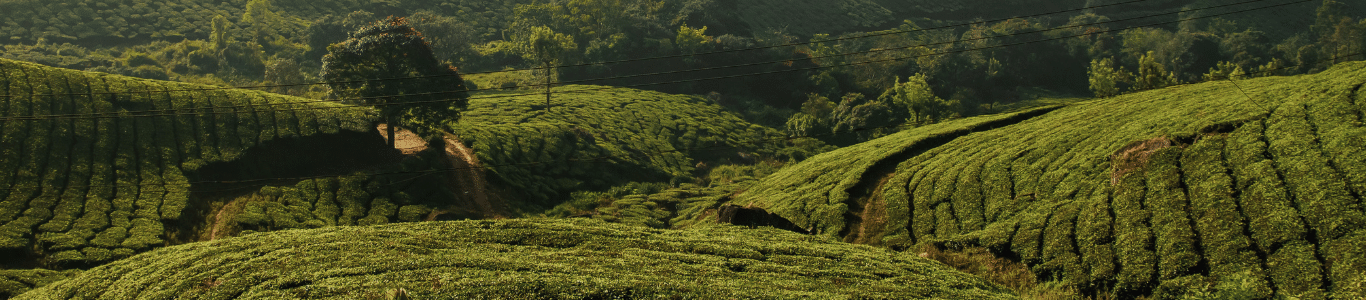
Improve grassland management
System: Dairy cattle
Mainly applicable for: Grass-based systems
Not applicable or effective for: No grassland
Description
Improving grassland management practices to achieve greater herbage production and improved nutritional value. This includes good agricultural practices such as optimized N fertilization, enhanced botanical composition, grazing management, avoiding conservation losses, or harvesting at an earlier maturity stage. For grazing animals stocking densities should match the carrying capacity of the land in relation to forage production and climatic conditions, and a high level of grass utilization should be realized.
For information about optimizing N fertilization rate and incorporating clover in grassland, see factsheets ‘Improve grassland fertilization’ and ‘Incorporate legumes in grassland’. For information about liming, see factsheet ‘Lime soils when required’.
Mechanism of effect
Improved forage quality reduces GHG emissions though several pathways. Enhanced digestibility of the feed lowers enteric methane emissions, while higher nutrient density and energy content improve feed efficiency. This means cows require less feed to meet energy needs, reducing the demand for supplementary feeds and their associated emissions. Faster rumen passage of high-quality forage also limits fermentation of undigested material. Improved animal performance further reduces emissions per unit of milk or meat produced. However, feeding improved quality of forage may increase absolute methane emissions per head due to greater dry matter intake and increase nitrous oxide emissions from manure due to a higher nitrogen excretion.
Feeding grass at an earlier maturity stage increases digestibility and results in lower enteric methane emissions per kg milk, but will also result in lower herbage yields and thus additional emissions from imported forage or feed. It is thus important to strike a balance between herbage yield and quality. Also, effects on total GHG emissions can vary depending on specific choices and farm-level interactions. For example, supplementary feed materials purchased to compensate for the lower herbage yields may reduce GHG emissions per kg milk due to improved ration digestibility, higher intake levels and higher milk yields. Also lower herbage yields will have less impact on farms with abundant grass.
Emerging research shows that grazing, especially full-time grazing, reduces enteric methane emission of dairy cows as compared to feeding silage indoors (e.g., Koning et al., 2024; Olijhoek et al., 2025; Lind et al., 2025). So far no (LCA) studies are available showing effects on total cradle-to-farm gate GHG, with before-mentioned favorable effects on enteric methane included.
Reference situation
Sub-optimal grassland management (particularly for net yield, forage quality, and fertilization)
Legend
| ● – Small effect (<5%) | o – No effect | o – no effect |
| ●● – Medium effect (5-20%) | ● – Unfavourable effect | ? – unknown effect |
| ●●● – Large effect (>20%) | ● – ● – Variable effect (depending on farm characteristics or way/level of implementation) |
Effect on total greenhouse gas (GHG) emissions
| Mean effect and range in kg CO2-equivalents: | per kg product | per farm | Level of evidence | ||
| Mean | (min-max) | Mean | (min-max) | ||
| Improve forage quality | ●● | ●–●● | ? | Low | |
| Reduce field, conservation and feeding losses | ● | ●–● | ● | ●–● | Low |
| Grazing vs. grass silage fed indoors | ? | ? | Low | ||
Effect per emission source
| Source | Manure storage | Animals | Feed and forage production | Barn | ||||
| Gas | CH4 | N2O | CH4 | CO2 | N2O | LUC | CO2 | |
| Improve forage quality | ? | ● | ●● | ● | ? | |||
| Reduce field, conservation and feeding losses | ● | ● | ● | |||||
| Grazing vs. grass silage fed indoors | ● | ● | ●● | ● | ? | ? | ? | |
*risk of an adverse effect (see ’cause of variable or unfavourable effect’)
Explanation of variable effect
Improve forage quality
The impact of improved forage quality on methane emissions per kilogram of milk is greatest when there is a significant increase in grass quality, especially in situations where animals previously received sub-optimal energy and nutrient supply. Enhanced animal performance further amplifies this effect. Concentrate supplementation enhances the methane-reducing effect of highly digestible grass by altering rumen fermentation, improving feed efficiency and reducing methane emissions from fibre digestion. The total GHG effect at farm level depends on how the mprovement in forage quality is realized. For example, feeding grass at an earlier maturity stage may result in additional emissions from supplemental feed due to lower herbage yields, and, in case of harvested grass, increased CO2 emissions from greater fuel requirements per kg of herbage. The increase in nitrous oxide emissions from manure due to higher protein levels of grass depends on total crude protein level of the feed ration, and can be partly offset by feeding supplements with reduced crude protein content (see factsheet ‘Reduce crude protein content of the diet’).
| Literature references | Improve forage quality |
|---|---|
| Åby et al., 2019 | Impact of grass silage quality on greenhouse gas emissions from dairy and beef production |
| Van Middelaar et al., 2014 | Cost-effectiveness of feeding strategies to reduce greenhouse gas emissions from dairy farming. |
| van Gastelen et al., 2018 | Are dietary strategies to mitigate enteric methane emission equally effective across dairy cattle, beef cattle, and sheep? |
| Warner et al., 2016 | Effects of nitrogen fertilisation rate and maturity of grass silage on methane emission by lactating dairy cows |
| Arndt et al., 2022 | Full adoption of the most effective strategies to mitigate methane emissions by ruminants can help meet the 1.5 °C target by 2030 but not 2050 |
| van Gastelen et al., 2018 | Are dietary strategies to mitigate enteric methane emission equally effective across dairy cattle, beef cattle, and sheep? |
| Van Middelaar et al., 2014 | Cost-effectiveness of feeding strategies to reduce greenhouse gas emissions from dairy farming. |
| O’Brien et al., 2020 | LIFE BEEF CARBON: a common framework for quantifying grass and corn based beef farms’ carbon footprints |
| Weiby et al., 2025 | Milk production and methane emissions from dairy cows fed silages from different grassland species and harvesting frequencies |
| Alvarez et al., 2022 | High-digestible silages allow low concentrate supply without affecting milk production or methane emissions |
| Eugene et al., 2021 | Methane mitigating options with forages fed to ruminants |
| Literature references | Reduce field, conservation and feeding losses |
|---|---|
| Van Schooten and Philipsen, 2012 | Grass silage management affecting greenhouse gas emissions and farm economics |
| Literature references | Grazing vs. grass silage fed indoors |
|---|---|
| Koning et al., 2022 | Enterische methaanemissie van melkvee in relatie tot (vers) graskwaliteit: Jaarrapport 2: 2021: Resultaten van een meerjarige beweidingsproef naar methaanemissie bij weidegang, zomerstalvoedering en het voeren van graskuil. Rapport/Wageningen Livestock Research; No. 1402 |
| Lind et al., 2025 | Methane emissions from dairy cows grazing multi-species pastures under high-latitude conditions |
| Olijhoek et al., 2025 | Methane emission of dairy cows grazing versus indoor feeding with silage |
| Lardy et al., 2025 | Milk production and methane emissions in dairy cows on production or exercise pastures with an automatic milking system |